Where the Game Begins: A History of London’s Portland Club
The Portland Club in London is widely regarded as the “Vatican of Bridge.” Established in 1814, it is the oldest card-playing club in the world and remains the definitive guardian of the rules for rubber bridge in the United Kingdom and much of the Commonwealth.
If you’ve ever argued over a “revoke” (failing to follow suit) or the exact penalty for an “exposed card,” you are essentially debating the centuries-old decrees of the Portland Club.
1. The Historical “Lawmakers”
Originally founded as the Stratford Club, it moved to its famous location on Stratford Place and eventually became the Portland Club. Its authority began with Whist, the predecessor to Bridge. For over 150 years, the club functioned as the ultimate arbiter for card games, much like the Royal & Ancient Golf Club of St Andrews does for golf.
- 1894: Lord Brougham introduced a new game he had learned in India called “Bridge” to the club. Within a year, the Portland Club published the first official Laws of Bridge.
- 1909: They issued the first code for Auction Bridge, which introduced the concept of bidding for the trump suit.
- 1929: After some resistance, they adopted the “Vanderbilt” scoring system, which gave birth to modern Contract Bridge.
2. The International Alliance
For decades, the Portland Club and the Whist Club of New York were the “two popes” of card games. They occasionally disagreed on minor rules (like the value of suits), but in 1932, they joined forces to create the first International Code of Laws.
Today, while the World Bridge Federation (WBF) oversees international tournament play (Duplicate Bridge), the Portland Club remains the co-author and custodian of the laws for Rubber Bridge—the version played for stakes in social clubs and homes.
3. The Club Today (2026 Status)
The Portland Club is still active and maintains its prestigious reputation.
- Rule Keeping: It continues to collaborate with the English Bridge Union (EBU) and the American Contract Bridge League (ACBL) to update the Laws of Bridge.
- The Portland Bowl: The club famously sponsors the Portland Bowl, the premier British university bridge championship. The 2026 finals are scheduled to be hosted at the club on April 25–26, 2026.
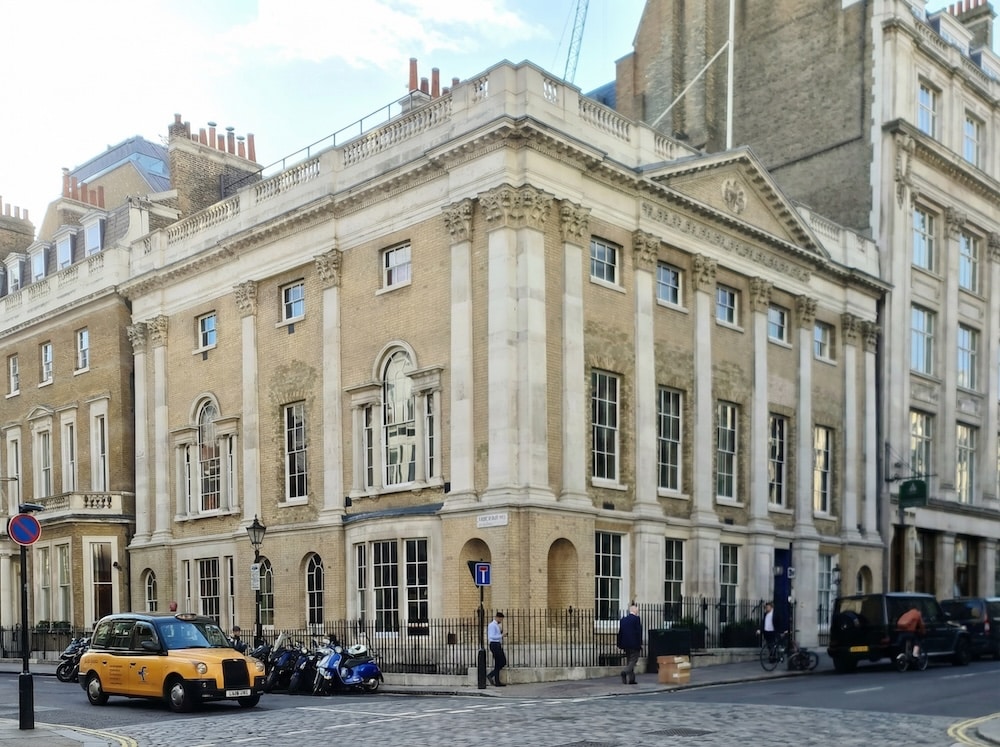
- Atmosphere: It remains a private members’ club. While it has moved locations over the years (currently sharing premises with the Savile Club in Mayfair), the focus remains on high-level play, etiquette, and the preservation of the game’s integrity.
An Anecdotal History of the Portland Club
Fun Fact: The “Revoke” Rule
In the early days of the Portland Club, the penalty for a “revoke” (playing the wrong suit when you had the right one) was so severe it could cost you the entire game. The club’s meticulous focus on these rules was designed to prevent cheating in high-stakes games where thousands of pounds might be on the table.
The “007” Connection: Bridge, Not Shaken
Did you know that James Bond’s creator, Ian Fleming, was a regular at the Portland Club? When he needed a setting for the high-stakes card games in his novels, he used the Portland as his blueprint for the fictional Blades Club. In Moonraker, when Bond faces off against the villainous Sir Hugo Drax in a game of Bridge, every card played follows the strict technical “Laws” maintained by the Portland Club. Fleming even consulted with the club’s top players to ensure the famous “Duke of Cumberland” hand in the book was mathematically perfect.
The “Accidental” Birth of Bridge
The arrival of Bridge at the club in 1894 is a classic tale of British eccentricity. Lord Brougham, recently returned from military service in India, was sitting down for a standard game of Whist. When it was his turn to deal, he forgot to turn up the final card to determine the “trump” suit.
When his partner pointed out the error, Brougham famously replied: “I’m sorry, I forgot I was playing Whist. I thought I was playing Bridge.” The other members were so fascinated by this “new” Indian variation where the dealer chose the trumps that they abandoned Whist that very night. Within a year, the Portland Club published the world’s first official rules for the game.
The “Two Popes” and the Atlantic Divide
For decades, a “cold war” existed between the Portland Club in London and the Whist Club of New York. Because they both claimed to be the ultimate authority, the rules of Bridge actually changed depending on which direction you were sailing! If you started a game on a cruise ship in London, the point values for suits were different by the time you reached New York Harbor. It wasn’t until 1932 that representatives from both “Vaticans” met at the Ritz in Paris to sign a “peace treaty,” creating the first unified International Code of Laws we use today.
The Ghost of Mayfair
One of the most charming things about the Portland Club is its invisibility. Despite being the most influential card club in history, you won’t find a building with “The Portland Club” etched in gold over the door. Throughout its history, it has moved through various elite locations—from Stratford Place to Pall Mall, and currently to a stunning 18th-century mansion at 69 Brook Street (which it shares with the Savile Club). It remains an “Invisible Empire,” preferring to let its rulebook do the talking while the members play in quiet, wood-paneled privacy.
The “Cumberland Hand”: A £20,000 Warning
The club is also the home of the legendary “Cumberland Hand.” As the story goes, the Duke of Cumberland was dealt a hand so powerful it seemed impossible to lose. He reportedly bet a staggering £20,000 (a fortune in the 19th century) on a single game of Whist. However, his opponent held a mathematically rare “perfect defense” and the Duke lost every single trick. To this day, the hand is cited in the club’s lore as a reminder that in the world of the Portland Club, no hand is ever a “sure thing.”
Read all about this historic hand in our article, “The £20,000 Trap: The Legend of the Cumberland Hand“
Links and Resources
Finding a direct “official website” for the Portland Club is a bit like trying to find the secret entrance to a speakeasy—it’s a private members’ club that values its privacy. However, because they are the governing body for the rules of the game, their influence is all over the web.
Here are the most useful links for your blog post or research:
1. The Official “Laws of the Game”
Since the Portland Club is the co-author of the rules used by millions, these are the definitive technical links:
2. The Portland Bowl (University Bridge)
If you want to track the “next generation” of the club’s legacy:
- Portland Bowl Results & 2026: This link shows current information. As of March 2026, the Quarter-Finals are set to play by March 31, leading up to the Finals at the Portland Club on April 25–26, 2026.
3. Historical & Architectural Context
- Great Bridge Links: The Portland Club: A fantastic summary of the club’s history, its connection to Ian Fleming (James Bond), and its various moves around London.
- The Savile Club: Since the Portland Club currently shares premises with the Savile Club at 69 Brook Street, Mayfair, this site gives you a look at the “extravagant interiors” where the games take place today.
4. Encyclopedia Entries
The Authentic Code of the Card Room
“No person shall be allowed to bet, who has not paid his former losses… and let no gentleman, on any account, show any signs of distaste or anger at his partner’s play, for the game is one of science and silent observation. He who loses his temper, loses his advantage.” — From “Advice to the Young Whist Player” by Thomas Matthews (1804), the standard authority during the Portland Club’s founding.