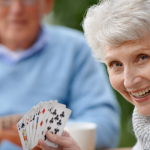
From Bridge Tables to Forecasting: How Players Think in Probabilities
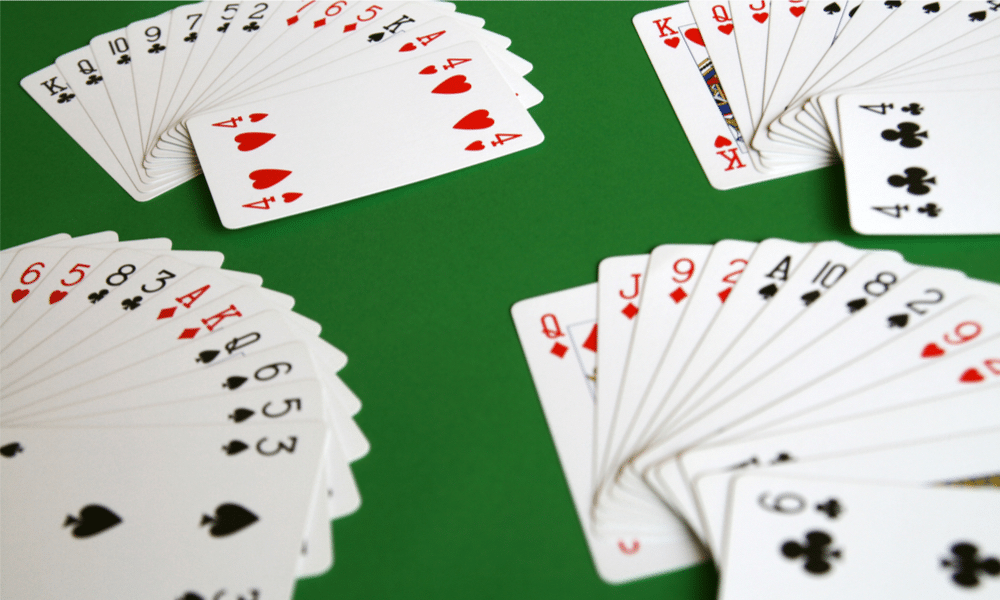
Bridge is one of the few card games that rewards genuine probabilistic thinking over raw luck, and the mental habits it develops transfer cleanly into real-world decision-making. The best bridge players are not guessing. They are working through distributions, updating their beliefs as new information surfaces, and choosing lines of play that maximize their chances across the full range of possibilities. That process mirrors how forecasters, analysts, and strategists reason in domains far outside the card room.
The Mathematics of Card Distribution
Before a single card is played, a bridge hand carries a precise mathematical structure. The most common hand pattern dealt in bridge is the 4-4-3-2 distribution, consisting of two four-card suits, a three-card suit, and a doubleton, and it appears more frequently than any of the other 38 possible hand patterns. High-card point probabilities are equally precise: a player has a 9.41 percent chance of holding exactly 10 HCP, a 9.36 percent chance of holding exactly 9 HCP, and a 8.94 percent chance of holding exactly 11 HCP.
Being dealt 7 to 12 HCP accounts for just over 50 percent of all hands, with one hand in every four holding 6 to 8 HCP and one hand in every five holding 12 to 14 HCP. These a priori probabilities form the statistical baseline from which every declarer and defender begins reasoning before the bidding and play introduce new information.
Trump Suit Management and the 68 Percent Rule
One of the most practically useful probability benchmarks in bridge concerns missing trumps. When declarer is missing five cards in the trump suit, the probability that the opponents hold those cards in a 3-2 split is approximately 68 percent, making that the assumption a competent declarer builds their plan around.
A 4-1 split, by contrast, occurs roughly 28 percent of the time and requires a fundamentally different line of play. The mistake less experienced players make is committing to a single assumed distribution without identifying the breakeven point: if a safety play costs one trick but protects against a 28 percent layout, the arithmetic usually supports taking it.
Strong bridge players do not think in terms of what is most likely happening. They think in terms of which line of play succeeds across the greatest weighted range of possible distributions.
Counting Cards as Applied Probability
As a bridge hand progresses, what began as a problem of incomplete information gradually resolves. Every card played, every bid made, and every hesitation observed narrows the range of possible distributions across the four hidden hands.
This process of counting cards is not the intuitive shorthand the phrase sometimes implies in other games. It is a systematic application of probability, updating estimates in real time as the sample space of remaining possibilities contracts. If an opponent has shown out of a suit early in the play, the declarer can recalculate the distribution of remaining cards with near-certainty across the suits still in play.
The reduction in incompleteness is sometimes deterministic, as when a card hits the table, and sometimes probabilistic, as when an opponents bidding pattern rules out certain distributions with high confidence but not certainty.
Bayesian Inference at the Card Table
The formal name for the thinking process strong bridge players apply is Bayesian inference: starting with prior probabilities, then updating beliefs as new evidence arrives. Before the opening lead, the prior is the mathematical a priori distribution.
After the auction, the prior shifts based on what the bidding revealed about high-card point ranges and suit lengths. After the first few tricks, the prior shifts again based on what has been played, what has been discarded, and what the opponents’ choices imply about their holdings. By the later stages of a hand, a competent declarer has effectively reconstructed both opponents’ hands from inference rather than direct observation.
Outside the bridge room, some fans use modern predictions apps to track possibilities for events like elections or big games, but the core skill is the same as at the table: weighing the odds and updating your beliefs as new cards, or new data, are revealed.
How Bridge Thinking Applies to Real-World Forecasting
Election forecasters, meteorologists, and sports analysts all operate within the same inferential framework that bridge players apply at the table. A weather model does not predict rain because rain is certain. It assigns a probability to rain based on available atmospheric data, then updates that probability as the forecast window narrows.
An election model does not declare a winner based on early polling. It maintains a probability distribution across outcomes and revises it as new polls, demographic data, and economic indicators arrive.
The bridge mindset trains exactly this kind of thinking: resist the urge to collapse a distribution into a single expected outcome, hold the uncertainty consciously, and make decisions that perform well across the range of possibilities rather than optimizing for the single most likely scenario. The practical skill transferred is comfort with acting under uncertainty while remaining open to revision.
When to Play the Odds and When to Read the Room
One of the more advanced applications of probabilistic thinking in bridge involves recognizing when the mathematical baseline should be overridden by inference from behavior. A straightforward finesse might succeed 50 percent of the time on pure odds, but if the bidding marks one opponent with a specific high-card holding, the actual probability shifts dramatically from the theoretical prior.
The same logic applies in forecasting contexts where base rates are a useful starting point but individual context adjusts the probability significantly.
A candidate who historically performs at a certain level in national polls may face a very different distribution in a specific state given local economic conditions.
The bridge player who has learned to distinguish between the a priori distribution and the inference-adjusted distribution is practicing the same skill as the analyst who knows when to trust the model and when the specific data in front of them demands a different weight.